
Star Trek Outposts Unknown Metal: Supply Chain Guide
Manage Star Trek Outposts Unknown metal with tips on Metal Collectors, crew assignments, storage, and supply chains. Keep your research outposts building.
Jump to
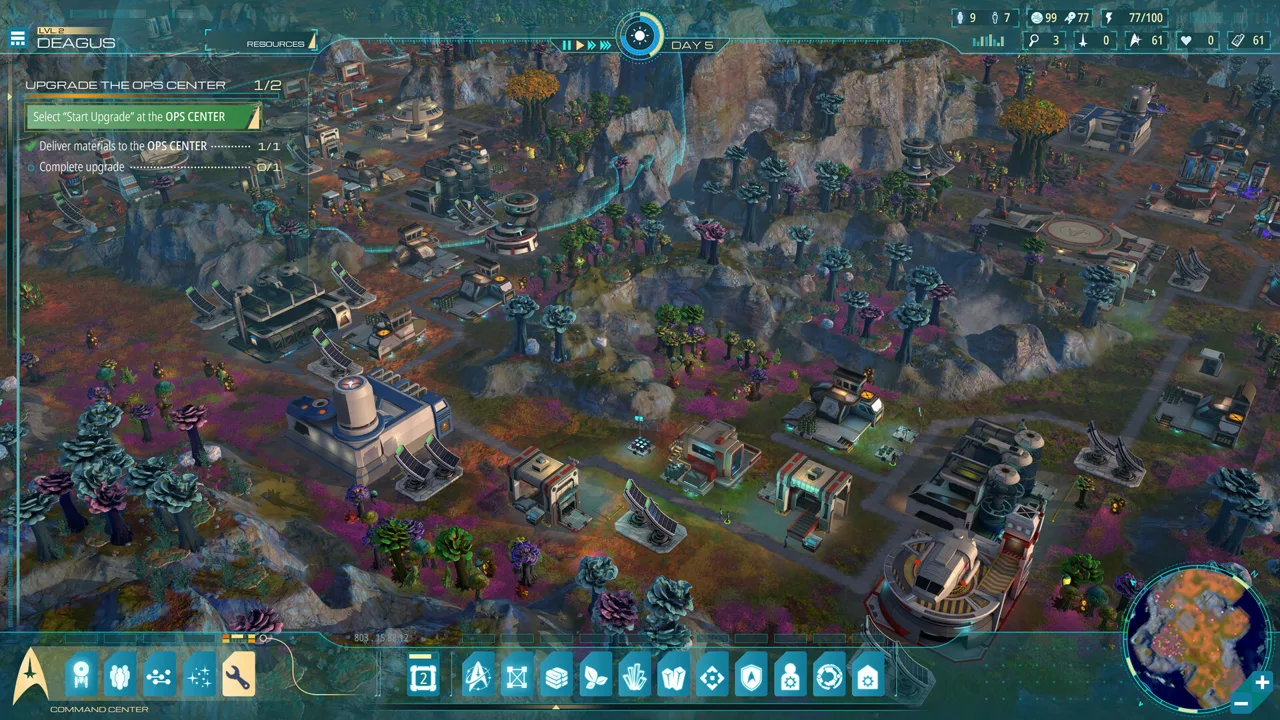
How to Get Metal in Star Trek: Outposts Unknown
Star Trek Outposts Unknown metal shortages can leave construction waiting while your crew juggles research, exploration, and survival. Organizing collection and delivery helps keep your next project moving without pulling attention away from essential crew support. This Star Trek Outposts Unknown metal guide explains the Metal Collector, material processing, and the logistics worth checking when supplies fall behind.
Start by locating metal-rich terrain and assigning crew members to the Metal Collector. In the updated demo, the opening camera faces a metal-rich area, and crew assigned to the collector gather metal faster. Those changes belong to the demo; use your current resource tooltips to check where materials can be found or produced in the launch game.
Hover tooltips explain the origins of the game’s 55 unique resources. Use them whenever a construction requirement sends you looking for an unfamiliar material.
| Collection detail | What to do |
|---|---|
| Metal Collector | Assign crew members to metal collection |
| Metal-rich starting terrain in the updated demo | Inspect the area facing the opening camera |
| Resource tooltips | Hover over a material to check where it comes from |
| Rock investigations in the updated demo | Use Science officers for faster investigation |
Keep investigation and collection separate in your planning. Investigating a rock helps you explore the environment; assigning crew to the Metal Collector addresses gathering. Give both tasks attention rather than assuming an exploration order will also maintain your material supply.
Before ordering another building, inspect its exact resource requirements. A shortage of raw metal calls for a different response than a shortage of a processed construction material.
Official page: Star Trek Outposts Unknown (playstack.com)
Keep Your Metal Collector Staffed
A Star Trek Outposts Unknown metal supply needs crew time as well as access to resources. Your officers also handle construction, scientific work, medical care, and threats, so review their assignments when collection falls behind.
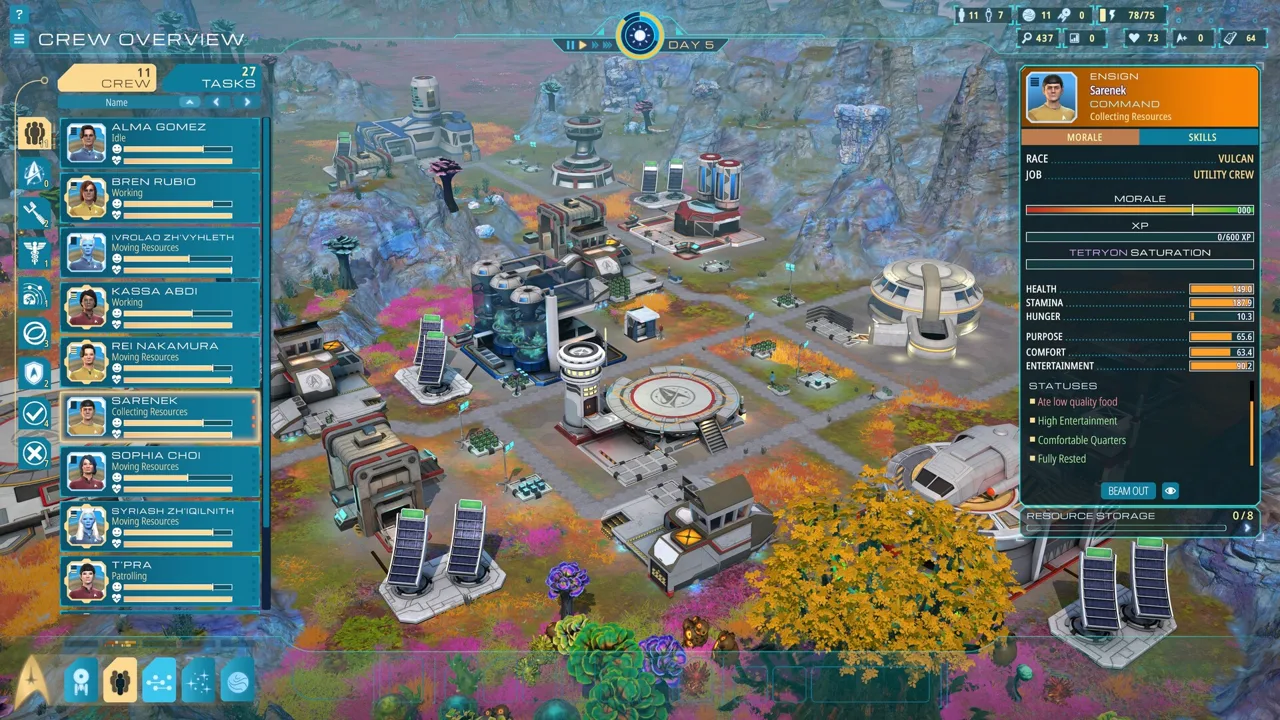 Image: Steam / Magic Fuel Games
Start with the collector’s staffing. Check whether crew members are assigned, then follow what those officers are actually doing. Expanding the outpost creates more work across the same workforce; include gathering in that expansion plan.
Use these checks when metal becomes the immediate priority:
- Review collection assignments. Keep crew assigned to the Metal Collector while you address the shortage.
- Check work shifts. Review who works during the day and who works at night.
- Inspect crew health. Address injuries and radiation exposure alongside production needs.
- Review competing projects. Compare the resources required by new construction and ongoing production.
Day and night shifts give you control over when your crew works. Use that control to organize gathering around the rest of the outpost’s workload. Include the facilities and supplies those officers need, especially when you begin supporting personnel on the planet surface.
Crew quarters, mess halls, and medical facilities help an outpost operate independently of the U.S.S. Resonant. Food synthesizers still require organic inputs, so expanding your workforce also expands your supply responsibilities.
Check new arrivals’ competencies before assigning them. Additional personnel bring useful skills, but they also need food, accommodation, and medical support. Match recruitment and assignments to the outpost you can sustain.
Direct crew commands also help during emergencies. Engineers can maintain buildings, Medics can treat injured personnel, and Security can respond to threats. These actions bypass the work queue. Use them to handle an urgent problem while keeping longer-term construction and production goals organized.
Separate Raw Metal From Processed Materials
Star Trek Outposts Unknown metal management becomes more demanding once your production chains expand. Raw materials, alloys, and manufactured components belong to different parts of the resource economy.

The game includes materials such as Polyalloy and Duranium alongside components such as Dutronic Chips and Memory Banks. Resources move through gathering, refining, combining, transportation, and use. Read the requested item’s name carefully before adding more collection work.
| Material or component | Supply check |
|---|---|
| Raw metal | Review collection assignments and delivery |
| Polyalloy | Inspect the production requirement requesting it |
| Duranium | Check its resource tooltip and the relevant supply chain |
| Dutronic Chips | Trace the component’s required inputs |
| Memory Banks | Review the production chain supplying the component |
Treat those checks as separate investigations. If a building needs Polyalloy, inspect Polyalloy production and its inputs. Collecting more raw material only addresses the problem when that material is part of the requirement holding production back.
Watch for overlapping demand, too. Construction and manufacturing can compete for supplies. Compare their requirements before committing to several projects together, and prioritize the project that resolves your current shortage.
For example, if you are expanding research facilities while producing equipment, review both sets of requirements. Reduce competing commitments when the same material is needed in several places. Give your gathering and delivery work room to catch up.
Keep the distinction between having a resource and having it delivered in mind. Material waiting elsewhere still needs transportation before it can support the intended job. Follow the supply chain through to its destination instead of stopping at the inventory total.
Use tooltips to investigate unfamiliar resources as they appear. With dozens of materials in circulation, checking the exact requirement is more useful than relying on a crate’s color or a name remembered from an earlier objective.
Check Storage, Transport, and Building Utilities
A Star Trek Outposts Unknown metal shortage can involve more than collection. The broader logistics network includes storage, transportation, building inputs, and utilities. Check those systems before committing more crew to gathering.
 Image: Steam / Magic Fuel Games
Production buildings need the appropriate resource inputs and access to the utilities required for their operation. Water, power, and compute all matter to outpost design, while pipes and conduits occupy physical space.
| System | What to inspect |
|---|---|
| Storage | Available room for incoming resources |
| Transportation | Movement between collection, storage, and production |
| Power | Supply and connections for buildings that require it |
| Water and compute | Required services for the production building |
| Production inputs | Materials needed by the current process |
Leave space for infrastructure when laying out facilities. Buildings are only part of the footprint; their connections also need room. Check the utility requirements before filling the surrounding area with another construction project.
Network infrastructure became mostly free and instant to construct in the final prelaunch changes. Check each connection’s cost as you build, and use that flexibility to organize the network around working facilities.
For longer routes, ground and air vehicles support exploration and faster resource movement between facilities. Consider those transport options as operations spread across the map. Keep distance in mind when choosing where the next production building belongs.
Star Trek Outposts Unknown metal planning also extends beyond a single planet. Resource transfers between worlds let you address local shortages, while the U.S.S. Resonant supports developing outposts until they can function independently.
Before sending the ship elsewhere, review the outpost’s essential systems:
- Supply surface mess halls with their required food inputs.
- Check housing and medical support.
- Inspect storage for incoming materials.
- Review production buildings and their utility needs.
- Arrange resource transfers around local shortfalls.
Passing ships periodically bring personnel and key resources. Include those deliveries in your planning, and check what arrives before committing it to new projects. Keep building local supply chains so the outpost can continue its scientific work while the Resonant is needed elsewhere.
Protect Your Supply Network From Environmental Hazards
Star Trek Outposts Unknown metal collection shares the map with dangerous conditions. Expanding your gathering operation also means supporting the crew and infrastructure working farther from the center of the outpost.
Tetryon radiation threatens personnel and buildings. Shield Emitters protect areas of your settlement, but establishing that protection requires processed rare materials. Plan the protected area around the facilities and crew you need to support.
| Environmental challenge | Planning tip |
|---|---|
| Tetryon radiation | Include shielding in expansion plans |
| Costly Shield Emitters | Choose protected expansion areas carefully |
| Injured crew | Maintain medical support and use direct Medic actions |
| Buildings needing maintenance | Use Engineers to address repairs |
| Distinct planetary biomes | Inspect local resources and hazards before expanding |
Check protection alongside production capacity. A new gathering or manufacturing project adds work, infrastructure, and exposure. Review those needs together before spreading the settlement farther across the terrain.
Planetary conditions also change the logistics problem. Daegus includes a temperate oasis, rocky desert, and crystal formations. Kourou combines frozen glaciers, volcanic badlands, and steam fields. Each environment brings different resources, opportunities, and dangers.
On Kourou, glaciers conceal important resources, while the steam fields contain the planet’s only source of organic material. Plan food support alongside construction supplies when establishing operations there. Metal collection cannot sustain the crew by itself.
Neral is the final planet you explore and presents the game’s most hostile environment. Carry the same habits into that expansion: inspect local resources, plan utilities, organize transport, and support the officers doing the work.
Keep your next construction goal tied to the outpost’s immediate needs. Prioritize gathering when raw supplies fall behind, processing when an alloy is missing, and transportation when materials are waiting elsewhere. Check crew health and building maintenance throughout that process.
FAQ
How do you get Star Trek Outposts Unknown metal?
Locate metal-rich terrain and assign crew members to the Metal Collector. In the updated demo, assigned crew collect metal faster, and the opening camera faces a metal-rich area. Use resource tooltips to inspect material locations and production options in the launch game.
Why does construction still need materials when I have metal?
Check the exact item required. Construction and production involve multiple resources, including processed materials such as Polyalloy. Review the requested material’s inputs and transportation needs, then address the part of the supply chain holding up the job.
Can you move resources between planets?
Yes. Interplanetary resource transfers help fill local supply shortages. The U.S.S. Resonant also supports developing planetary operations. Prepare housing, food, medical care, and production systems before sending the ship to another destination.
Can crew collect resources during the night?
Crew assignments include day and night shifts. Review those schedules when organizing collection, construction, and research. Keep the needs of surface personnel supplied, and include radiation protection and medical support in your staffing plans.
Continue with
 Star Trek Outposts Unknown Resource Management GuideMaster Star Trek Outposts Unknown resource management with tips for production chains, crew shifts, storage, and planetary supply. Keep outposts running.
More in Resources
See all Resources
Quick access

Star Trek Outposts Unknown Release Date: Out Now on PC
Star Trek Outposts Unknown release date was October 20, 2026. Explore PC launch details, the $32.99 price, Mac plans, and tips for your first outpost.

Star Trek Outposts Unknown Demo Removed: What Happened?
Star Trek Outposts Unknown demo removed? Learn why the trial ended, what changed before launch, and how to play the full Steam release on Windows PC today.
Star Trek Outposts Unknown Guide: Build and Survive
Use this Star Trek Outposts Unknown guide to manage crew, fix resource bottlenecks, protect your outposts, and prepare for planets in the X’Lehari System.
Star Trek Outposts Unknown Building Tree Explained
Use the Star Trek Outposts Unknown building tree, plan resource chains, manage power and shielding, and prepare your outposts for life without the ship.
Join the community
Official channels for news, updates and player help: