
Star Trek Outposts Unknown Building Tree Explained
Use the Star Trek Outposts Unknown building tree, plan resource chains, manage power and shielding, and prepare your outposts for life without the ship.
Jump to
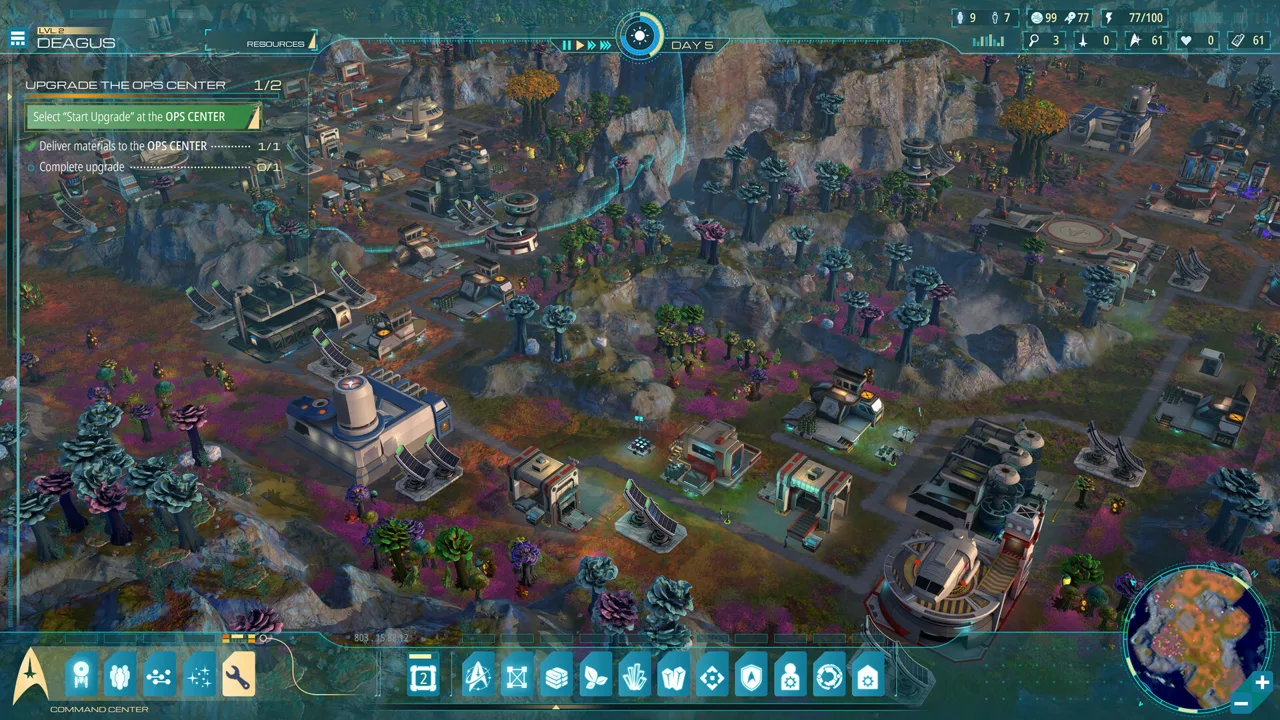
How the Star Trek Outposts Unknown Building Tree Works
An unlocked blueprint won’t keep your outpost running by itself. The Star Trek Outposts Unknown building tree connects construction with research, resource processing, utilities, and crew support, so every expansion needs a working supply chain. Use this Star Trek Outposts Unknown building tree guide to plan facilities around what your outpost can actually sustain.
You command the U.S.S. Resonant while establishing research operations across the X’Lehari System. Your buildings support the investigation of the Tetryon Rift, but scientific progress depends on keeping people healthy, materials moving, and essential infrastructure supplied.
Think about construction through the jobs each facility performs:
| Facility or system | Role in your outpost | Connected requirement |
|---|---|---|
| Research facilities | Support scientific investigation | Scientific materials and supporting logistics |
| Equipment manufacturing | Produces equipment such as sample containment units | Manufacturing inputs |
| Fusion generators | Provide power | Deuterium |
| Mess halls | Synthesize meals for surface crews | Food proteins |
| Crew quarters and medical facilities | Support personnel living on the planet | Supplies needed for independent operation |
| Shield Emitters | Protect areas against Tetryon radiation | Processed rare materials |
These functions overlap. Research needs samples, sample collection needs suitable equipment, and manufacturing needs inputs and utilities. Adding the final building in that chain won’t solve a shortage farther upstream.
Plan backward from the task you want to complete. Identify the required facility, inspect its inputs, and follow those inputs back through production and delivery. That keeps your construction plans connected to the mission instead of filling the outpost with buildings waiting for supplies.
Official page: Star Trek Outposts Unknown (playstack.com)
Unlock Blueprints and Keep Research Supplied
The Star Trek Outposts Unknown building tree develops alongside your outpost’s scientific and administrative capabilities. Upgrading the operations center opens additional blueprints, while exploration and laboratory work feed your research efforts.
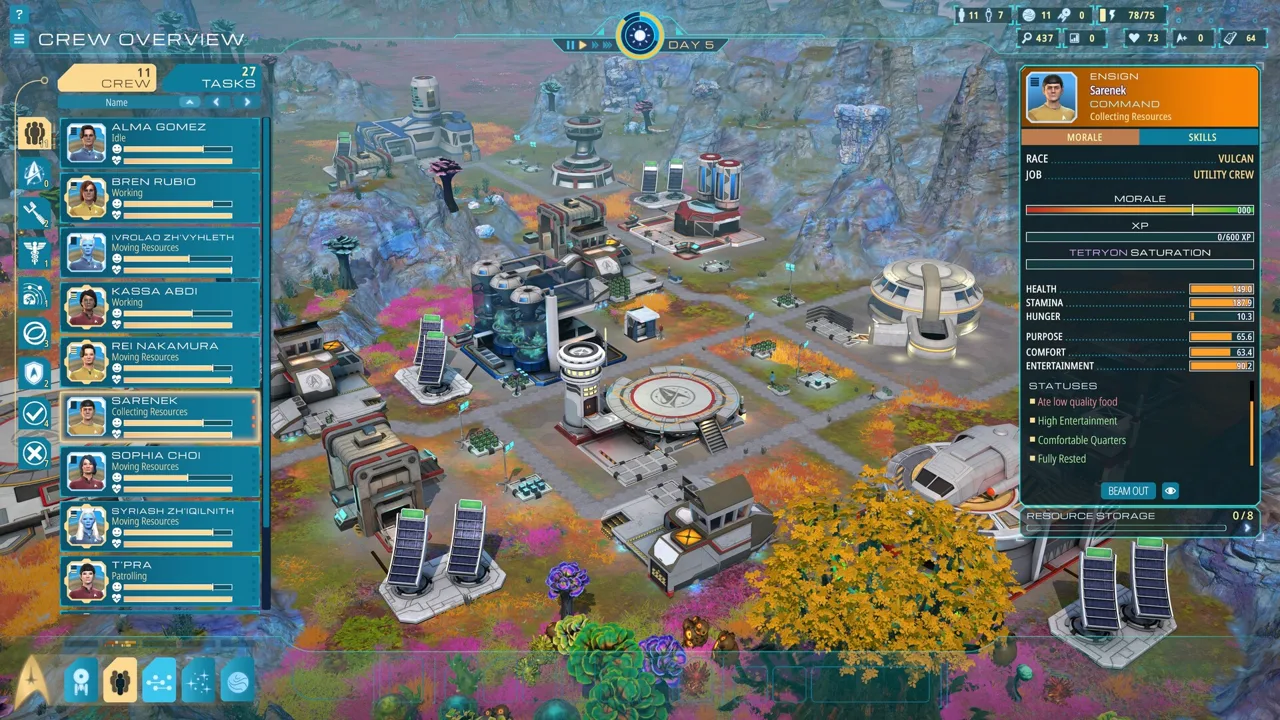 Image: Steam / Magic Fuel Games
Separate three questions whenever you consider an expansion:
- Can you access the blueprint?
- Can you supply the construction materials?
- Can you keep the completed facility operating?
Each question addresses a different problem. An operations center upgrade can open more construction options, but the new facilities still need materials, utility connections, and ongoing inputs.
Upgrade with a Specific Construction Goal
Inspect your available blueprints before committing resources to an operations center upgrade. Choose the facility your mission or supply chain needs, then prepare the materials and infrastructure that will support it.
For example, opening more manufacturing options creates additional demands on your resource network. Check your existing production before expanding that network. If current buildings are already short on power or deliveries, resolve those shortages before adding another dependent facility.
Avoid treating every new blueprint as an immediate construction order. Prioritize the structures that address the obstacle currently holding back exploration, research, or crew support.
Connect Sample Collection to Laboratory Work
Scientific samples can be studied at the basic laboratory. Equipment manufacturing also supports research by producing containment units used for collecting samples.
Build your research plans around that connection. Keep laboratory work supplied with usable samples, and prepare collection equipment alongside your exploration efforts. A laboratory without scientific material leaves part of your scientific operation idle.
Assign crew deliberately, too. Science officers investigate discoveries, while engineers can maintain buildings through direct crew commands. Those commands bypass the normal work queue, allowing you to respond to maintenance needs while longer construction and production tasks remain queued.
Use that control when an urgent repair threatens the operation you are trying to expand.
Supply Buildings with Materials, Power, Water, and Compute
The Star Trek Outposts Unknown building tree operates within a resource system containing 55 unique materials. Those materials include Polyalloy, Duranium, Dutronic Chips, and Memory Banks, with resources moving through research, harvesting, refining, manufacturing, and transportation.
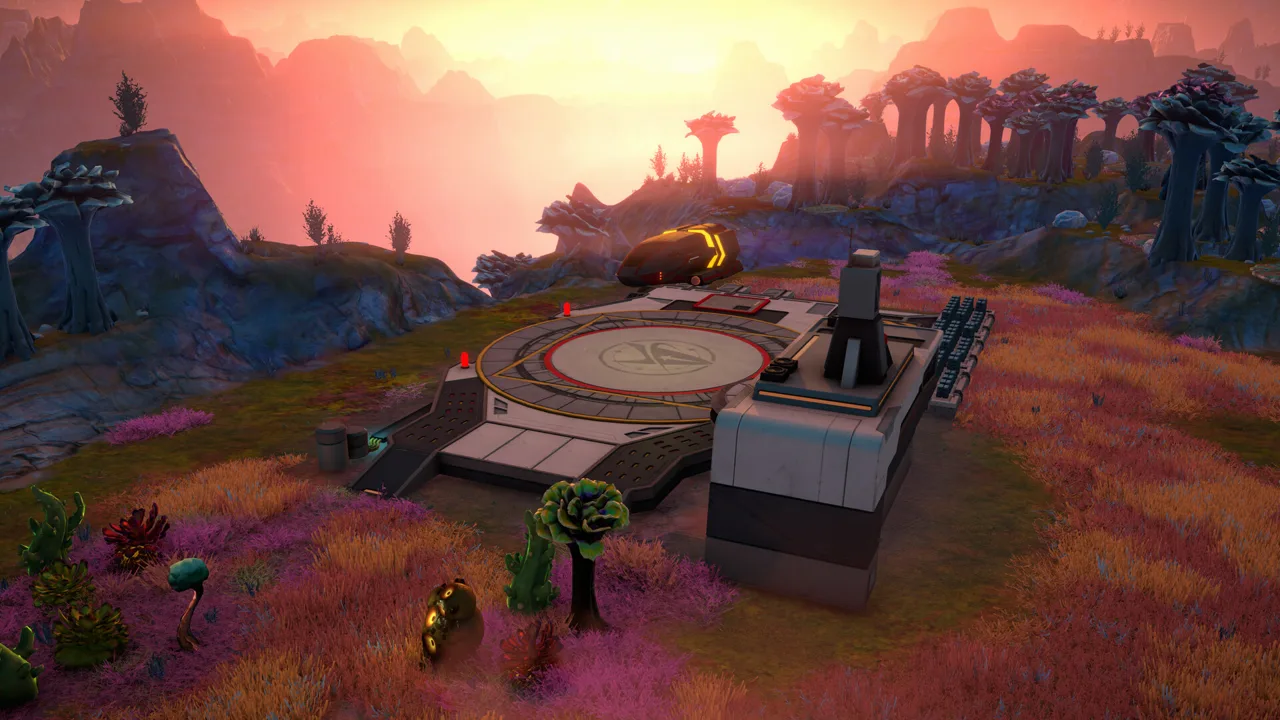 Image: Steam / Magic Fuel Games
A large inventory total doesn’t answer every production question. Materials also need to reach the facility that uses them, and that facility needs its required utilities.
| Input or resource | Supported use | Planning action |
|---|---|---|
| Deuterium | Fuel for fusion generators | Check fuel availability before depending on additional generation |
| Food proteins | Meal production in mess halls | Supply surface kitchens before leaving the planet |
| Organic material | Input for food synthesizers | Include biological harvesting in food planning |
| Water | Building upkeep and certain advanced processes | Allow space for water infrastructure |
| Power | Operation of buildings that require energy | Check generation and connections |
| Compute | Processing capacity required by buildings | Include compute demand in expansion plans |
| Rare materials | Processing needed for Shield Emitters | Prepare materials before extending protected areas |
The resource tooltips help you trace these dependencies by showing where materials can be found or produced. Use them whenever an unfamiliar component blocks construction.
Follow a Shortage Backward
When a facility stalls, inspect the immediate requirement before ordering more construction. A production problem can begin with missing inputs, insufficient utilities, or materials still awaiting delivery.
Use this checklist to narrow the problem:
| Situation | What to inspect | Action |
|---|---|---|
| A building lacks power | Generation, fuel, and network connections | Restore the required supply and connection |
| Manufacturing lacks materials | The input’s harvesting or production chain | Address the missing upstream resource |
| Supplies are waiting for delivery | Transportation and resource location | Review how materials reach the destination |
| A mess hall lacks food proteins | Surface supplies and ship storage | Transfer available proteins from the Resonant |
| Research lacks samples | Exploration, collection equipment, and laboratory inputs | Prepare collection supplies and gather scientific material |
Keep production and transportation in the same plan. Ground and air vehicles help move resources between facilities as well as support exploration. Review those options when distance becomes a recurring obstacle.
Storage deserves attention alongside production. Leave room for incoming supplies and organize storage around the materials your outpost handles. Interplanetary transfers can also fill local shortages, connecting individual bases into a broader supply network.
Check the whole chain before duplicating a production building. Another facility drawing from the same shortage adds demand without addressing the missing input.
Plan Shield Coverage and Utility Space Before Expanding
Radiation protection makes layout a major part of the Star Trek Outposts Unknown building tree. Shield Emitters require processed rare materials, and more structures need shielding against Tetryon radiation as your operations develop.
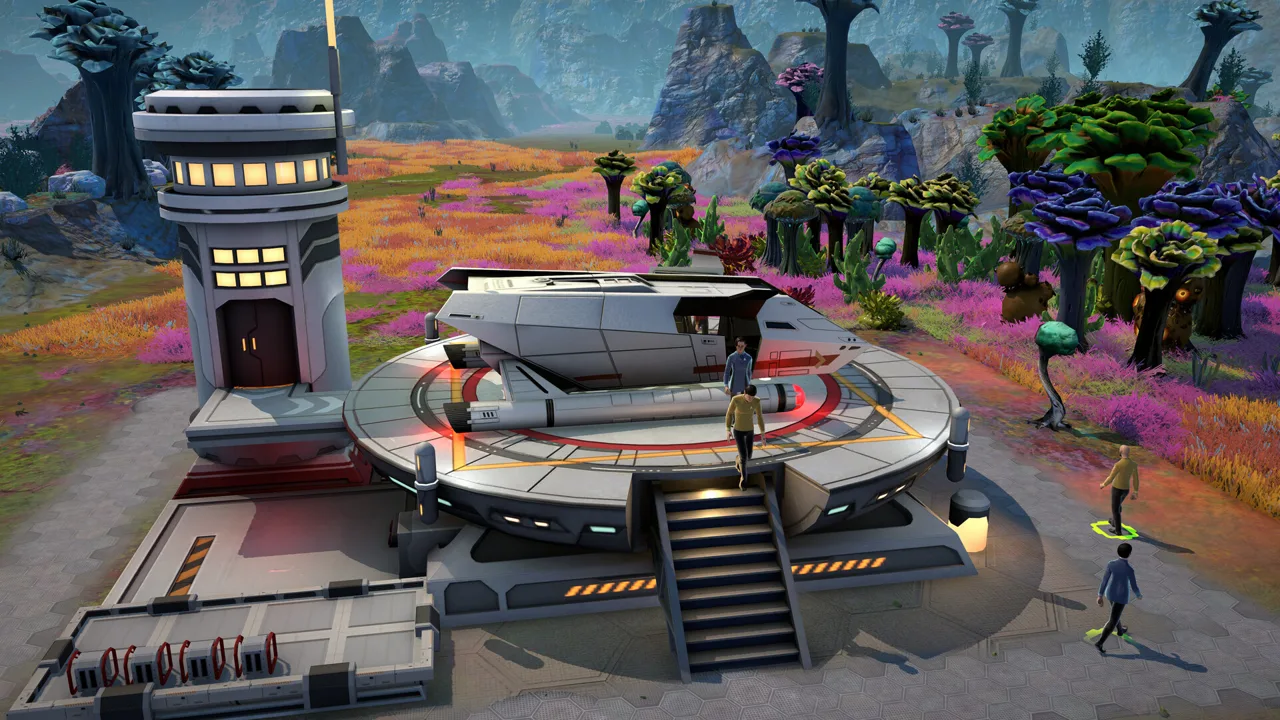 Image: Steam / Magic Fuel Games
Protection applies within shield range. Place facilities with that coverage in mind, especially when expanding toward an area exposed to the Rift’s hazards.
Reserve Space for Connections
Buildings aren’t the only objects competing for room. Water pipes and other utility conduits occupy space, so include their routes while planning the outpost.
Before placing a new facility:
- Inspect the utilities it requires.
- Leave space for the necessary pipes and conduits.
- Check how resources will reach it.
- Review shield coverage for the intended area.
These are planning priorities rather than a fixed blueprint sequence. Apply them to the building you are placing and the environment surrounding it.
At launch, network infrastructure is mostly free and instant to construct. Use that flexibility to complete connections as your layout develops, while preserving room for the utility network itself.
Expand Protection Alongside Production
Tetryon storms harm crew and buildings, creating health and repair demands. Engineers can maintain buildings, and medical personnel can treat injured crew through direct commands.
Prepare those responses alongside your shielding. Keep engineering and medical support in your staffing plans, then use direct commands when urgent situations need attention outside the work queue.
Avoid committing all available materials to a new production area while leaving its protection unfinished. Prepare the Shield Emitter’s material requirements as part of the expansion. Radiation protection belongs in the construction budget for the area it will serve.
Compact planning also helps you evaluate which facilities sit inside your protected space. Review the position of each addition before stretching the outpost toward another resource deposit.
Build Outposts That Can Operate Without the Resonant
Your ship supports surface operations while a new outpost develops. Eventually, planetary housing, food production, medical care, and supporting systems allow research to continue while the Resonant travels elsewhere.
That transition gives the Star Trek Outposts Unknown building tree a practical destination: an outpost capable of supporting its crew and scientific work after departure.
Before sending the ship onward, review:
- Housing for personnel remaining on the surface.
- Food supplies and mess hall production.
- Medical facilities and their supplies.
- Storage for incoming and locally produced resources.
- Water, power, and compute required by active facilities.
- Protection for exposed crew and structures.
Inspect supplies as well as completed buildings. A constructed mess hall still needs food proteins to produce meals. Check the Resonant’s storage and transfer available supplies before departure.
Adapt Construction to Each Planet
The planets of the X’Lehari System present different resource and environmental problems.
| Planet | Environmental features | Construction consideration |
|---|---|---|
| Daegus | Temperate oasis, rocky desert, and crystal formations | Match exploration and resource planning to the different biomes |
| Kourou | Moving glaciers, volcanic badlands, and steam fields | Prepare for extreme cold and locate the organic resources in steam fields |
| Neral | Three biomes and the game’s most hostile environment | Review crew support, supplies, and protection before extending operations |
On Kourou, establishing headquarters and basic facilities against the cold is part of setting up the new outpost. Landing pads also matter because Tetryon activity interferes with transportation technology.
Keep food planning tied to the planet’s ecology. Kourou’s steam fields contain its only organic material, making that biome relevant to the supply needs of food synthesizers.
Biological harvesting also provides seeds for replanting and regrowth. Replant harvested specimens as you develop your resource network.
Match Staffing to the Base You Can Support
Periodic resupplies bring new crew and key materials through passing ships. Examine each arrival’s competencies, then account for the additional support those personnel require.
Day and night shifts give you control over who works at different times. Assign those shifts alongside the facilities and supplies available to support them.
Before expanding your roster or production footprint, revisit the Star Trek Outposts Unknown building tree with a specific question: which facility or supply chain needs attention for the next mission? Build toward that requirement, complete its connections, and prepare the crew who will keep it functioning.
FAQ
How do you unlock more buildings in Star Trek: Outposts Unknown?
Upgrading the operations center opens additional blueprints. Prepare construction materials and supporting utilities alongside the upgrade so you can use the new options.
What should I prioritize in the Star Trek Outposts Unknown building tree?
Prioritize the facility that addresses your current mission or supply problem. Check its inputs, utilities, delivery needs, and protection before committing to construction.
Why does a completed building still need attention?
Buildings require operating support beyond construction materials. Depending on the facility, that includes resource inputs, water, power, or compute. Inspect the missing requirement and follow its supply chain backward.
What does an outpost need before the Resonant leaves?
Prepare housing, food, medical support, storage, and the utilities needed by active facilities. Supply those systems before departure so the surface crew can continue its research work.
Continue with
 Star Trek Outposts Unknown Metal Collector: Setup GuideGet your Star Trek Outposts Unknown metal collector working with tips on crew assignments, early metal gathering, resource delivery, and outpost logistics.
More in Buildings
See all BuildingsQuick access

Star Trek Outposts Unknown Release Date: Out Now on PC
Star Trek Outposts Unknown release date was October 20, 2026. Explore PC launch details, the $32.99 price, Mac plans, and tips for your first outpost.

Star Trek Outposts Unknown Demo Removed: What Happened?
Star Trek Outposts Unknown demo removed? Learn why the trial ended, what changed before launch, and how to play the full Steam release on Windows PC today.
Star Trek Outposts Unknown Guide: Build and Survive
Use this Star Trek Outposts Unknown guide to manage crew, fix resource bottlenecks, protect your outposts, and prepare for planets in the X’Lehari System.

Star Trek: Outposts Unknown Food Guide: Feed Your Crew
Master Star Trek Outposts Unknown food with tips on food proteins, mess halls, cargo transfers, and organic supplies. Keep your crew fed on alien worlds.
Join the community
Official channels for news, updates and player help: