
Star Trek: Outposts Unknown Food Guide: Feed Your Crew
Master Star Trek Outposts Unknown food with tips on food proteins, mess halls, cargo transfers, and organic supplies. Keep your crew fed on alien worlds.
Jump to

How Food Works in Star Trek: Outposts Unknown
Your mess hall needs ingredients before it can feed anyone. Star Trek Outposts Unknown food production depends on organic inputs, food proteins, and getting supplies to the crew who need them. Understanding the Star Trek Outposts Unknown food chain helps you keep both the U.S.S. Resonant and your planetary outposts supplied as operations spread across the X’Lehari System.
The key ingredient to watch is food proteins. A planetary mess hall uses them to synthesize meals for crew living on the surface. Food synthesizers still require organic input in this mid-23rd-century setting, so advanced technology does not remove the need to gather and transport resources.
Think through food supply in stages:
| Supply stage | What it involves | What to check |
|---|---|---|
| Organic input | Food synthesis depends on organic material | Locate biological resources and maintain access to them |
| Food proteins | Planetary mess halls require proteins to synthesize meals | Inspect protein supplies where meals are being produced |
| Transportation | Resources move between the ship, surface, and planets | Send supplies to the location that needs them |
| Meal production | The planetary mess hall feeds surface inhabitants | Keep its required inputs supplied |
Separate the ingredient problem from the delivery problem. An outpost can need food proteins while the Resonant has proteins sitting in storage. Harvesting more material would address a different part of that chain.
For Star Trek Outposts Unknown food management, start with a simple question: where are the ingredients, and where is the crew eating? Answer that before expanding production or moving supplies away from another occupied location.
Official page: Star Trek Outposts Unknown (playstack.com)
Get Food Proteins to the Right Mess Hall
The Resonant supports planetary operations while you establish an outpost. Its onboard facilities include a mess hall, crew quarters, and medical facilities, while its storage holds resources you can send to the surface.
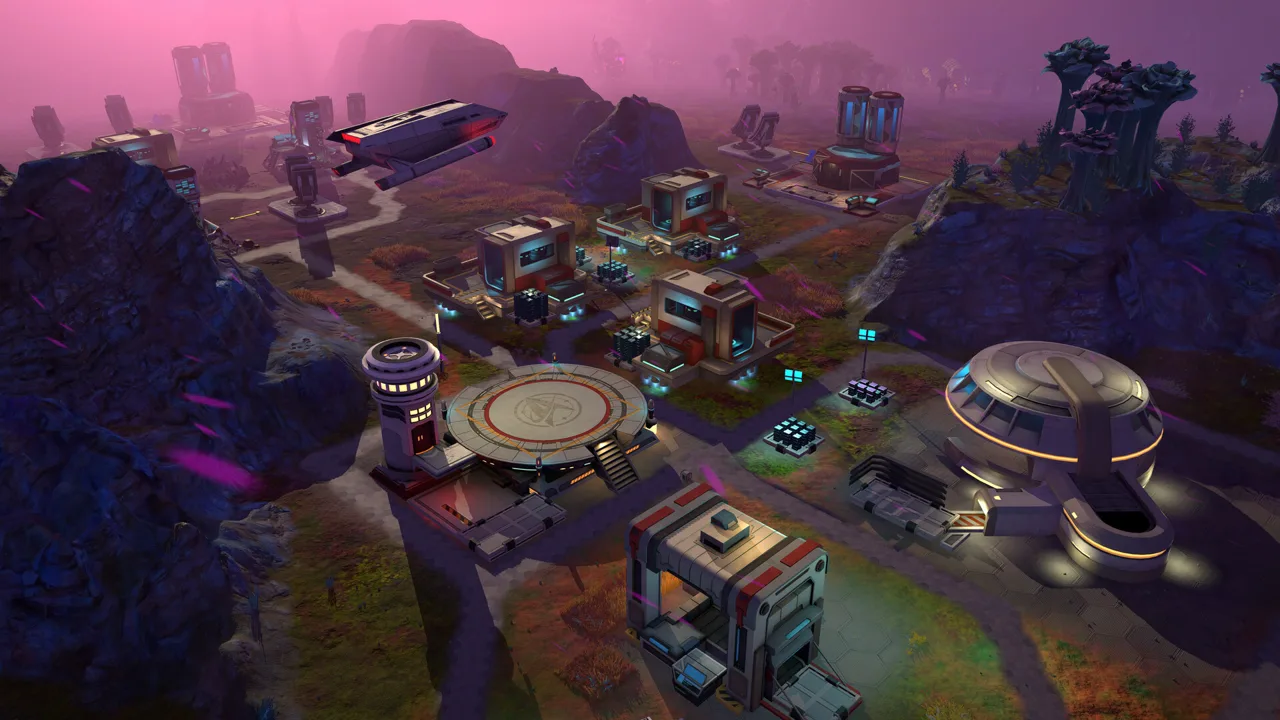 Image: Steam / Magic Fuel Games
Planetary mess halls let crew eat on the ground. Together with housing, medical facilities, and other support systems, they help an outpost operate while the ship travels elsewhere.
That creates separate supply responsibilities. Stock aboard the ship does not solve a surface shortage until you move the needed material down.
| Location | Food-related function | Practical action |
|---|---|---|
| U.S.S. Resonant storage | Holds resources, including food proteins in the Kourou departure sequence | Inspect cargo before gathering replacement ingredients |
| Planetary mess hall | Synthesizes meals from food proteins for surface crew | Supply proteins to support meal production |
| Established outposts | Can receive resources through interplanetary transfers | Use transfers to address local supply shortfalls |
When a surface mess hall needs proteins, follow the demonstrated ship-to-surface workflow:
- Inspect the U.S.S. Resonant.
- Open its storage and locate food proteins.
- Send food proteins to the planetary surface.
- Check the mess hall’s production status afterward.
Keep the distinction between ingredients and meals clear. Food proteins supply the mess hall’s synthesis process; they are not a reason to ignore the building that turns those inputs into meals.
Star Trek Outposts Unknown food logistics also extends beyond the planet directly beneath your ship. Resource transfers between planets let you cover local shortages, which matters when different environments offer different resources.
Before sending cargo elsewhere, inspect the needs of the crew remaining behind. Supply a new settlement without stripping an occupied outpost of ingredients it still needs.
Passing ships periodically bring additional personnel and key resources. Examine those deliveries, but keep developing the harvesting, processing, and transportation systems that support your ongoing operations.
Troubleshoot Food Shortages Before Expanding
A food shortage deserves a close look at the whole supply chain. Start with the mess hall and trace its needs backward through ingredients, storage, transportation, and organic supply.
 Image: Steam / Magic Fuel Games
Avoid responding to every shortage by placing another building. A new structure still needs its own inputs and supporting infrastructure.
| Check | Why it matters | Action to take |
|---|---|---|
| Mess hall ingredients | Surface meal production requires food proteins | Inspect its protein supply |
| Ship inventory | Useful ingredients can remain aboard the Resonant | Check onboard storage and send proteins down |
| Resource storage | Incoming resources need storage space | Review capacity and organization |
| Building inputs | Production depends on resources and required utilities | Inspect the building’s displayed requirements |
| Crew expansion | Additional personnel require additional support | Review food and housing before adding more crew |
Start With Ingredients and Cargo
If the mess hall needs food proteins, check your Star Trek Outposts Unknown food supplies for existing proteins before committing crew to more harvesting. The Resonant’s storage is an especially useful place to inspect during preparations for another planetary expedition.
Then look at transportation. Resources must be moved to support production, and the game’s logistics includes transporting materials between facilities. Watch whether the needed supplies are actually reaching their destination.
Keep storage organized around the resources your outpost requires. Storage controls and resource filters help you manage a system with dozens of materials, from biological inputs to construction components.
Inspect Utilities and Crew Assignments
Production buildings need their required inputs, which can include water, energy, and compute. Inspect the requirements of the building you are troubleshooting rather than assuming every facility uses the same combination.
The wider outpost also needs functioning infrastructure. Fusion generators consume deuterium, for example, so energy production has a supply chain of its own. Check supporting systems when ingredient delivery alone does not resolve a production problem.
Review crew assignments and day and night shifts alongside those resource needs. Shifts give you control over who works during each part of the cycle; use that control when planning harvesting and production work.
For Star Trek Outposts Unknown food shortages, work from the visible problem backward. Identify the missing input or interrupted stage before adding another demand to the outpost.
Keep Organic Supplies Sustainable Across Planets
Organic material is part of the food system, and access to it changes with the environment. Plan around each planet’s resources instead of expecting every settlement to support the same layout.
 Image: www.playstack.com
Daegus includes a temperate oasis, rocky desert, and crystal formations. Kourou presents a harsher combination of glaciers, volcanic badlands, and steam fields. Its steam fields contain the planet’s only source of organic material.
On Kourou, make locating and supplying that organic source part of your settlement planning. Account for the work of getting resources from their environment to the facilities that need them.
Replant as You Harvest
Biological specimens contain seeds that let you replant and regrow what you harvest. Use that system when organizing continued biological collection.
Build replanting into your routine instead of treating each harvest as an isolated pickup. Sustaining access to biological material supports the same long-term goal as establishing reliable power or organizing cargo: keeping the outpost functioning after its initial supplies are spent.
Use resource tooltips to learn where a material can be found or produced. Those details help you distinguish between a resource you need to collect and one that requires a production process.
Star Trek Outposts Unknown food planning becomes more involved as you maintain several settlements. Keep track of which locations supply organic material and which depend on transfers to fill gaps.
Plan Around Environmental Risks
Your crew and infrastructure face more than ingredient shortages. Tetryon radiation threatens outposts, and Shield Emitters protect areas within their coverage. Those emitters require rare materials, making protected expansion a resource commitment.
Include protection in your plans for essential operations. Check the areas your crew must use and the facilities supporting your settlement before extending farther into hazardous territory.
Ground and air vehicles help exploration and resource transportation between facilities. Consider those transport capabilities as your operation spreads across the map, particularly when resource collection takes place away from the main settlement.
Use interplanetary shipments to address local shortfalls while developing the infrastructure each environment requires.
Prepare Your Food Supply Before the Resonant Leaves
Moving the Resonant to another destination changes what your established outpost needs to handle independently. Your planetary facilities must support the crew staying behind while the ship helps establish operations elsewhere.
The departure sequence toward Kourou includes supplying a planetary mess hall with food proteins from ship storage. Treat that preparation as a reminder to inspect the settlement’s support systems before traveling.
| Departure check | What to inspect |
|---|---|
| Planetary food production | Mess hall access to food proteins |
| Surface living facilities | Housing and other systems supporting resident crew |
| Medical support | Terrestrial medical facilities and their supplies |
| Production infrastructure | Required water, energy, compute, and resource inputs |
| Resource logistics | Storage space and supplies needed by the outpost |
Review the crew who will remain on the surface. The outpost needs more than a completed mess hall: its residents also rely on housing, medical care, and the infrastructure behind those facilities.
Inspect your incoming personnel, too. Starfleet periodically sends new crew, and their competencies matter when selecting the team for a new expedition. Every additional person also brings support needs that deserve attention before deployment.
Keep Star Trek Outposts Unknown food planning tied to expansion. Prepare the settlement you are leaving, then examine the resources available for the next one.
Before departure, work through this checklist:
- Check food proteins at the occupied planetary outpost.
- Inspect the Resonant’s cargo for supplies needed on the surface.
- Review storage and production inputs.
- Check housing, medical support, and crew assignments.
- Examine the next destination’s environment and resource needs.
Finish those checks while the ship is still supporting the settlement. Give the crew staying behind a supplied outpost, and carry a clear picture of the next planet’s needs into your next expedition.
FAQ
How does Star Trek Outposts Unknown food production work?
Planetary mess halls use food proteins to synthesize meals for surface crew. Food synthesizers require organic input, making biological resources and ingredient transportation part of your food supply.
Can you send food proteins from the ship to an outpost?
Yes. Inspect the U.S.S. Resonant’s storage and send food proteins to the planetary surface. This supplies the ingredients needed by the planetary mess hall.
Where is organic material found on Kourou?
Kourou’s steam fields contain the planet’s only source of organic material. Locate that biome when planning biological collection, and account for transporting resources back to your facilities.
How do you keep an outpost supplied after the ship leaves?
Supply its planetary mess hall and maintain the housing, medical facilities, utilities, and resource inputs supporting the resident crew. Use resource transfers between planets to fill local shortages.
Continue with
 Star Trek Outposts Unknown Metal: Supply Chain GuideManage Star Trek Outposts Unknown metal with tips on Metal Collectors, crew assignments, storage, and supply chains. Keep your research outposts building.
More in Resources
See all Resources
Quick access

Star Trek Outposts Unknown Release Date: Out Now on PC
Star Trek Outposts Unknown release date was October 20, 2026. Explore PC launch details, the $32.99 price, Mac plans, and tips for your first outpost.

Star Trek Outposts Unknown Demo Removed: What Happened?
Star Trek Outposts Unknown demo removed? Learn why the trial ended, what changed before launch, and how to play the full Steam release on Windows PC today.
Star Trek Outposts Unknown Guide: Build and Survive
Use this Star Trek Outposts Unknown guide to manage crew, fix resource bottlenecks, protect your outposts, and prepare for planets in the X’Lehari System.
Star Trek Outposts Unknown Building Tree Explained
Use the Star Trek Outposts Unknown building tree, plan resource chains, manage power and shielding, and prepare your outposts for life without the ship.
Join the community
Official channels for news, updates and player help: