
Star Trek Outposts Unknown Tech Data: Research Guide
Star Trek Outposts Unknown tech data fuels research. Learn how samples, laboratories, crew assignments, and outpost logistics support your next discovery.
Jump to
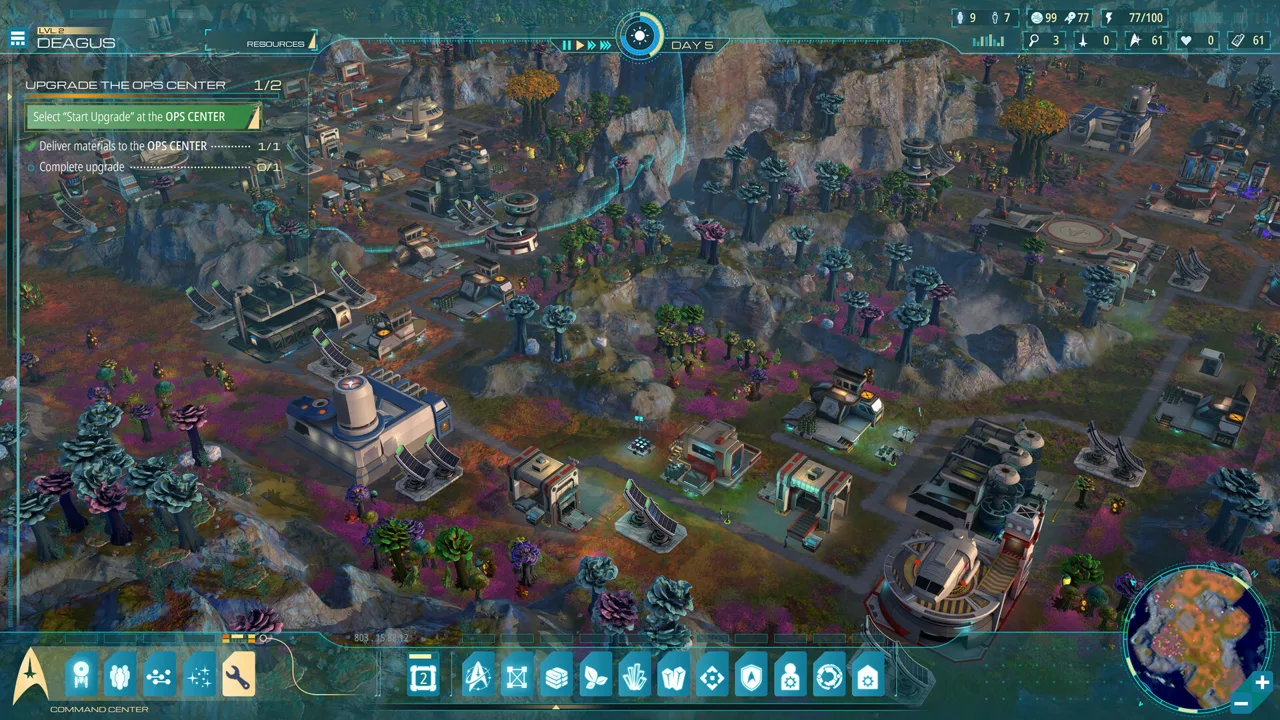
What Is Tech Data in Star Trek: Outposts Unknown?
Star Trek Outposts Unknown tech data lets you invest in new technologies as your scientific expedition develops. Running short on Star Trek Outposts Unknown tech data can hold up those choices while your outpost needs better facilities. Keep sample collection, laboratory work, and construction supplies moving together so you can put your discoveries to work.
Research sits at the center of your mission in the X’Lehari System. As captain of the U.S.S. Resonant, you establish outposts, investigate unfamiliar environments, and work toward understanding the Tetryon Rift. Your technology and building trees support that larger scientific effort.
The practical challenge is managing several connected requirements. Samples give your laboratory material to study, tech data supports technology purchases, and construction still needs resources after you gain access to a blueprint.
| Research element | Its role | What to check |
|---|---|---|
| Scientific samples | Material for study at the basic laboratory | Whether your crew has collected samples |
| Sample containment units | Equipment needed for sample collection | Whether manufacturing is supplying them |
| Tech data | Resource spent on technology choices | The requirements of the technology you want |
| Operations center upgrades | Open access to additional blueprints | Whether your center needs another upgrade |
| Construction resources | Materials used to build facilities | Whether the required supplies are available |
When planning your Star Trek Outposts Unknown tech data spending, identify the facility you want to operate next. Then check its technology requirements, blueprint access, and material needs together.
That keeps your research decisions connected to an actual outpost problem. A new technology becomes more useful when your crew can build, supply, and maintain the facilities associated with it.
Official page: Star Trek Outposts Unknown (playstack.com)
Collect Samples and Support Your Science Officers
Start with exploration. Science officers investigate unusual formations, and away teams can analyze strange occurrences to recover specimens for laboratory study. On Daegus, unusual roots introduce this connection between field investigation and research.

Assign Science officers to unfamiliar formations, and follow sample-related objectives as they appear. Keep the distinction between discovering a resource and collecting a specimen clear: your outpost needs both industrial supplies and material for scientific study.
Sample containment units deserve attention early in that process. Equipment manufacturing supports their production, and the sample-related dialogue makes their purpose clear: your researchers need suitable containers when they encounter specimens worth collecting.
| Part of the sample workflow | What it involves | Your immediate task |
|---|---|---|
| Field investigation | Examining unusual objects and formations | Assign an appropriate officer |
| Away-team analysis | Investigating strange occurrences for specimens | Review the encounter and crew needs |
| Containment supply | Producing units for sample collection | Keep equipment manufacturing supplied |
| Laboratory study | Working with collected samples | Check the basic laboratory’s work and inputs |
For Star Trek Outposts Unknown tech data production, look beyond the laboratory itself. If your lab lacks material to study, check exploration and containment supplies before expanding your research facilities.
Keep your field team safe, too. Engineers can maintain buildings, Medics can treat injured crew, and Security personnel can respond to threats. Direct role-specific commands bypass the normal work queue, allowing you to address emergencies while longer construction and production tasks remain scheduled.
Use those commands when an investigation puts your crew in trouble. Treat injuries and respond to threats before sending officers back into hazardous work.
Biological resource harvesting also includes seeds for replanting. Replant harvested specimens as you develop your outpost’s resource supply. Scientific expansion and environmental care both belong in the expedition’s routine.
Check the Entire Laboratory Supply Chain
A laboratory belongs to a working settlement. Buildings need utilities, production inputs, and crew support, while materials still have to travel between storage and their destination.

Water, power, and compute all matter in outpost planning. Their supporting pipes and conduits occupy space, so leave room for infrastructure when placing research and production buildings.
If Star Trek Outposts Unknown tech data progress has stalled, inspect the immediate production problem before adding another laboratory. Follow the materials from collection through manufacturing and delivery, then check the crew responsible for the work.
| Problem to inspect | Relevant system | What to do |
|---|---|---|
| No specimens ready for study | Exploration and sample collection | Return to investigations and sample-related tasks |
| Containment supplies are short | Equipment manufacturing | Check its production inputs and workload |
| Facilities lack utilities | Power, water, and compute | Inspect the required connections and supply |
| Materials are awaiting delivery | Transport and storage | Check where supplies are stored and needed |
| Work slows around shift changes | Crew scheduling and accommodation | Review day and night assignments |
| Crew members are injured | Medical support | Direct a Medic to treat them |
Storage organization helps you understand these dependencies. Resource tooltips show where materials can be found or produced, giving you a practical starting point when an unfamiliar ingredient stops manufacturing.
Hover over missing resources before sending your crew on a broad search. Check whether the ingredient comes from harvesting, processing, or another production facility, then address that requirement directly.
Crew travel matters as well. Ground and air vehicles support exploration and resource movement between facilities. Use those transport options as your operating area grows, especially when your outpost stretches across a large planetary surface.
Finally, inspect your shift arrangements. You can assign crew to day and night work, and some points of interest appear only at night. Keep essential research and support duties in mind when dividing your crew between shifts.
Spend Tech Data With a Buildable Goal in Mind
Before spending Star Trek Outposts Unknown tech data, decide what problem your next technology should help solve. Your immediate need might be stronger research capability, improved storage, better crew accommodation, or protection for an expanding outpost.
 Image: Steam / Magic Fuel Games
Read the technology requirements before committing. Then look at the buildings and production work that follow. A technology purchase and a functioning facility involve different parts of your economy.
Operations center upgrades also matter. Additional blueprints become accessible as you upgrade the center, so check that requirement when a building remains unavailable. Spending research resources elsewhere will not address an operations center upgrade requirement.
Use this planning sequence when considering your next investment:
- Identify the facility or capability your outpost needs.
- Inspect the relevant technology requirements.
- Check whether blueprint access requires an operations center upgrade.
- Review construction materials and their production chains.
- Plan the utilities, crew support, and transport the facility will need.
Treat this as a planning checklist, rather than a fixed purchase order. Your current environment and available supplies should guide the decision.
Shield Emitters illustrate why that matters. They protect outposts and crew from Tetryon radiation, but they require rare materials to be processed. Choose the areas you intend to protect, then prepare the manufacturing and supply work needed for that expansion.
Crew accommodation creates another important dependency. Planetary quarters, mess halls, medical facilities, and entertainment help an outpost support its personnel. Plan those facilities alongside scientific expansion, particularly when preparing to send the Resonant elsewhere.
Before committing materials to another research building, check whether your existing facilities have specimens, workers, utilities, and deliveries. Fix the specific shortage you find. Expanding capacity becomes a clearer decision once the current research operation has what it needs to work.
Keep Research Running Across Multiple Planets
Your expedition eventually has to support research beyond a single settlement. Resource transfers between planets cover local shortfalls, while established outposts continue their work as the Resonant travels.
Prepare each settlement for that independence before departure. Housing, food, medical care, and reliable production all contribute to an outpost that can function while your ship supports another location.
Star Trek Outposts Unknown tech data planning therefore belongs alongside your interplanetary logistics. Scientific goals depend on the supplies and crew support available at each destination.
| Outpost requirement | Resource or service involved | Preparation before departure |
|---|---|---|
| Meals | Food proteins for mess hall production | Check the local food supply |
| Crew accommodation | Planetary housing | Provide quarters for personnel remaining behind |
| Medical support | Surface medical facilities | Prepare care for the stationed crew |
| Fusion power | Deuterium | Check fuel availability |
| Production | Water, energy, compute, and material inputs | Inspect the facilities needed for ongoing work |
| Local supply gaps | Transfers between planets | Arrange the resources the outpost needs |
On Kourou, environmental planning becomes especially important. Frozen glaciers conceal resources, volcanic regions bring fire and magma, and steam fields contain the planet’s organic material. Its terrain gives you different reasons to explore each region.
Prepare basic facilities against the cold when establishing the outpost. Set up landing pads so crew can return to the Resonant, and investigate unfamiliar materials with your Science officers.
Tetryon activity also complicates transport and survival. Radiation storms harm crew and buildings, while shielding protects structures and personnel within range. Position your protected facilities around the work you need to sustain, and keep medical and engineering responses ready.
Before leaving any established outpost, check:
- Whether the remaining crew has housing, meals, and medical support.
- Whether essential production has its required utilities and inputs.
- Whether resource transfers address local shortages.
- Whether ongoing scientific work has samples and the equipment it needs.
Periodic resupplies bring additional crew and key materials. Examine each new officer’s competencies, and account for the food, accommodation, and other resources needed to support them.
Keep those checks tied to your next destination. The goal is a network of functioning research outposts, each contributing to the expedition while you investigate another part of the system.
FAQ
What is Star Trek Outposts Unknown tech data used for?
Tech data is spent on technology choices. Check the requirements of your intended purchase, then review the blueprint access, construction materials, and utilities needed to use the resulting facilities.
How do scientific samples fit into research?
Away teams can retrieve specimens from strange occurrences for study at the basic laboratory. Keep sample containment units available through equipment manufacturing, and assign officers to investigate unfamiliar formations.
Why are additional building blueprints still unavailable?
Some blueprint access requires further operations center upgrades. Inspect that requirement alongside your technology options, then prepare the materials needed for the upgrade and subsequent construction.
How do I prepare an outpost before the Resonant leaves?
Provide planetary housing, food production, and medical support. Check storage, utilities, production inputs, and any resource transfers needed to cover local shortages so the settlement can continue operating while your ship travels.
Continue with
 Star Trek Outposts Unknown Technology Tree ExplainedExplore the Star Trek Outposts Unknown technology tree, plan research priorities, and support new buildings with resources, shielding, and crew logistics.
More in Research
See all Research
Quick access

Star Trek Outposts Unknown Release Date: Out Now on PC
Star Trek Outposts Unknown release date was October 20, 2026. Explore PC launch details, the $32.99 price, Mac plans, and tips for your first outpost.

Star Trek Outposts Unknown Demo Removed: What Happened?
Star Trek Outposts Unknown demo removed? Learn why the trial ended, what changed before launch, and how to play the full Steam release on Windows PC today.

Star Trek Outposts Unknown Guide: Build and Survive
Use this Star Trek Outposts Unknown guide to manage crew, fix resource bottlenecks, protect your outposts, and prepare for planets in the X’Lehari System.
Star Trek Outposts Unknown Building Tree Explained
Use the Star Trek Outposts Unknown building tree, plan resource chains, manage power and shielding, and prepare your outposts for life without the ship.
Join the community
Official channels for news, updates and player help: