
Star Trek Outposts Unknown Multiplayer: Co-Op Guide
Star Trek Outposts Unknown multiplayer explained: learn how solo crew management works, what Steam features mean, and how to prepare research outposts.
Jump to

Does Star Trek: Outposts Unknown Have Multiplayer?
Planning a shared Starfleet expedition starts with one crucial detail: Star Trek Outposts Unknown multiplayer isn’t part of the October 20, 2026 PC release. Star Trek: Outposts Unknown is a single-player outpost builder, so your purchasing decision comes down to whether you enjoy managing a scientific expedition yourself. If you’re searching for Star Trek Outposts Unknown multiplayer before buying copies for friends, plan around a solo adventure built around crew assignments, research facilities, and interplanetary logistics.
You command the U.S.S. Resonant and guide its crew through the X’Lehari System. Your mission involves establishing research outposts while investigating the Tetryon Rift, a dangerous cosmic phenomenon threatening the system.
That setup involves plenty of teamwork within your expedition, but the crew operates under your direction. Managing engineers, scientists, medics, and security officers is part of the single-player strategy.
| Feature | PC launch experience |
|---|---|
| Single-player | Lead the expedition and manage its outposts |
| Online multiplayer | No multiplayer mode |
| Cooperative play | No shared co-op expedition |
| Competitive multiplayer | No player-versus-player mode |
For anyone evaluating Star Trek Outposts Unknown multiplayer, the practical takeaway is straightforward: buy it for the construction, exploration, and management experience. Its central challenge is coordinating people and infrastructure across unfamiliar environments.
The story takes place in the 23rd century, alongside the era depicted in Star Trek: Strange New Worlds. Expect scientific mysteries, difficult environments, and decisions about how to keep your expedition functioning as its responsibilities expand.
What Steam Features Mean for Playing With Friends
Steam Achievements, Steam Cloud, and Family Sharing are included features. These serve different purposes from multiplayer, so keep them separate when deciding whether the game fits your plans.
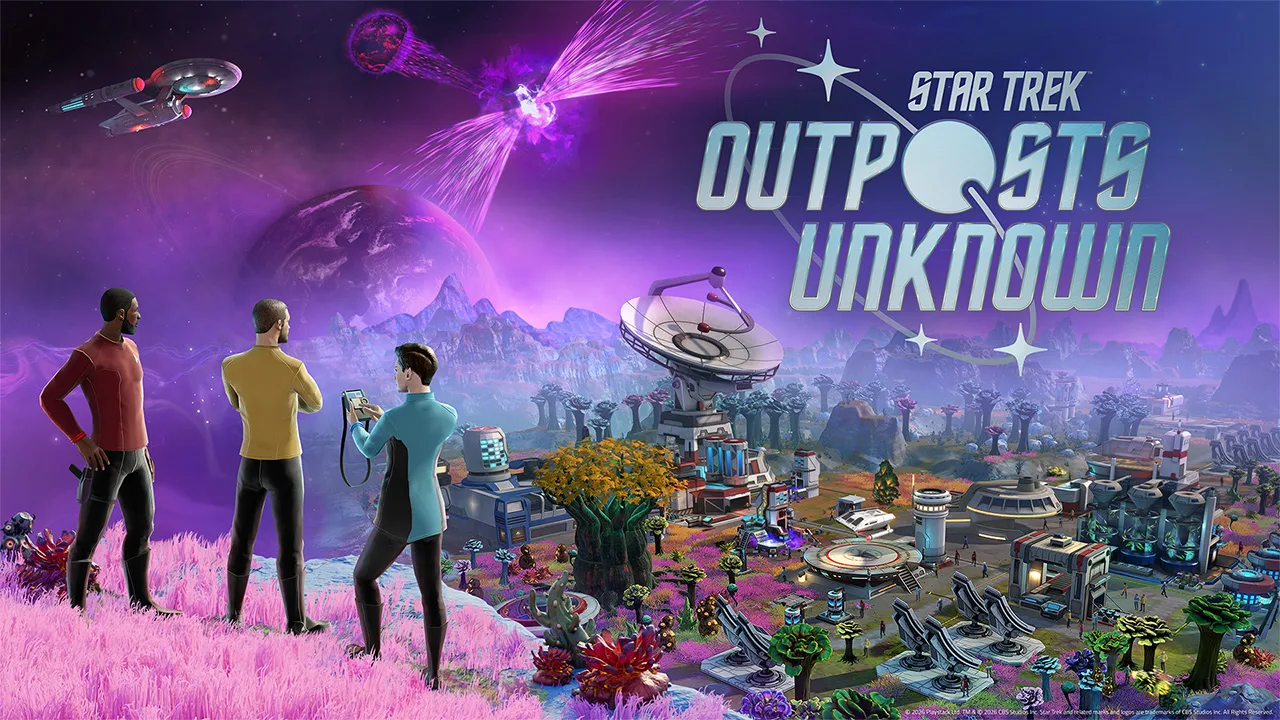 Image: www.playstack.com
| Steam feature | What it provides |
|---|---|
| Steam Achievements | Achievements associated with the game |
| Steam Cloud | Steam’s cloud-save feature |
| Family Sharing | Access through Steam’s family-sharing system |
| Single-player | A solo adventure directing the expedition |
Family Sharing does not add cooperative gameplay. Likewise, Steam Cloud does not turn your research network into a persistent world that friends can join.
If Star Trek Outposts Unknown multiplayer is your main reason for considering a purchase, settle the game-mode question before comparing hardware or planning a group session. Multiple copies do not create a shared expedition.
Friends can still make the strategy more social outside the game. Discuss outpost layouts, compare how you handle resource shortages, or talk through crew assignments while playing your own adventures. Keep that distinction clear: discussing decisions together is different from controlling the same outpost through an in-game co-op mode.
For purchasing, visit the Star Trek: Outposts Unknown Steam page.
The launch platform is Windows PC. Mac support follows in a future patch, so use the launch platform information when planning which computer to play on.
How Crew Management Works in a Solo Expedition
The appeal behind many Star Trek Outposts Unknown multiplayer searches is easy to understand: a research expedition sounds like something you could divide among friends. Here, those responsibilities become crew-management decisions for you.
Your officers have different specialties, and their assignments influence how the outpost handles construction, exploration, treatment, and emergencies. The game also lets you issue direct actions based on a crew member’s role.
| Crew specialty | Relevant responsibility |
|---|---|
| Engineering | Maintain buildings through direct crew commands |
| Medical | Treat injured crew through direct crew commands |
| Security | Respond to threats |
| Science | Investigate planetary materials and discoveries |
Direct commands bypass the normal work queue. That gives you a way to respond to an immediate problem while longer-term building and production tasks remain part of your plans.
Use direct commands when an emergency needs attention. Send an engineer to a damaged structure or a medic to an injured officer instead of relying entirely on queued work. Match the response to the officer’s specialty.
Crew management also extends beyond individual jobs. You can organize day and night shifts, and planetary facilities support officers who remain at an outpost.
Keep these priorities in mind:
- Inspect incoming officers’ competencies. Consider which specialties your expedition needs before adding more personnel.
- Account for their support needs. Additional crew also require the resources and facilities that keep them healthy and productive.
- Plan housing alongside workplaces. Crew quarters are part of building an outpost that can function independently.
- Support morale and health. Mess halls, medical facilities, and entertainment options contribute to life at your research stations.
Avoid treating recruitment as an automatic answer to every slowdown. More personnel create additional demands, so examine the underlying problem before expanding your crew.
A production building short on inputs needs a supply solution. An injured officer needs treatment. A distant work site raises transportation concerns. Keep those problems distinct when deciding where to direct your attention.
The satisfaction comes from making those responsibilities fit together. You are coordinating the expedition’s specialists while keeping its broader scientific mission moving.
Build Supply Chains That Support Independent Outposts
Understanding Star Trek Outposts Unknown multiplayer also means understanding what fills the solo experience. Much of your attention goes toward resource production, infrastructure, and the relationship between your ship and planetary facilities.

The game contains 55 unique resources at launch. Materials must be researched, harvested, refined, combined, transported, and used in scientific work. Examples include Polyalloy, Duranium, Dutronic Chips, and Memory Banks.
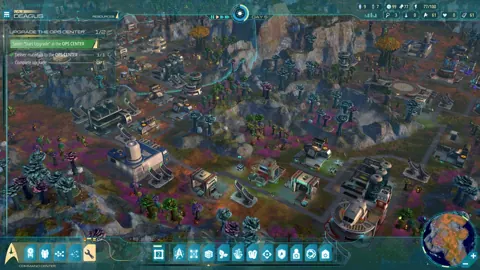
Buildings also need supporting services. Water, power, and computing capacity belong in your layout planning, along with the pipes and conduits connecting the network.
| System | Requirement or function | Planning tip |
|---|---|---|
| Food synthesizers | Require organic inputs | Account for food inputs when planning crew support |
| Fusion generators | Require deuterium | Include fuel supply in your power planning |
| Advanced processes | Some require water | Check water needs before expanding production |
| Building infrastructure | Uses water, power, and compute | Leave space for connecting infrastructure |
| Interplanetary transfers | Move resources between planets | Use transfers to address local supply shortages |
Trace a shortage through the entire production chain. Check the required material, its production process, the supporting infrastructure, and how it reaches its destination. Treating every interruption as a need for another building can leave the original problem unresolved.
Use resource tooltips to check where materials can be found or produced. With dozens of materials involved, that information helps you connect a construction requirement to the production work behind it.
Storage deserves attention alongside manufacturing. Leave room for incoming resources and consider how your storage organization supports the facilities consuming them.
Your ship initially supports planetary operations. As an outpost becomes self-sufficient, the U.S.S. Resonant can travel elsewhere while research continues on the surface.
Before departing, review the essentials:
- Check that planetary housing can support the crew remaining behind.
- Inspect food production and its required inputs.
- Review medical facilities and their supplies.
- Check the infrastructure supporting important production buildings.
- Examine local shortages that resource transfers could address.
This is where the management challenge grows beyond a single settlement. Each outpost contributes to a wider research effort, while different worlds create different supply problems.
The question behind Star Trek Outposts Unknown multiplayer often involves sharing that workload. In the solo game, your tools are crew assignments, production planning, transportation, and increasingly independent facilities.
Prepare for Planetary Hazards and Exploration
Your outposts spread across worlds with different environments. Those differences affect resources, construction decisions, and crew safety.
| Planet | Environments and challenges |
|---|---|
| Daegus | Lush terrain, rocky desert, and crystalline formations |
| Kourou | Moving glaciers, volcanic badlands, and steam fields |
| Neral | The expedition’s most hostile planetary environment |
Inspect a new environment before committing to expansion. Different zones present their own resources, opportunities, and risks, so avoid assuming that a layout suited to one location will handle every destination equally well.
Kourou illustrates that challenge clearly. Its frozen terrain conceals resources beneath moving glaciers, while volcanic areas introduce fire and magma. Steam fields contain the planet’s only source of organic material.
Those conditions make the relationship between exploration and logistics important. A promising resource deposit still needs a workable plan for reaching it, supporting the crew, and moving its output.
Tetryon radiation adds another layer of pressure. Shield Emitters protect areas of your outpost, but expanding that protection requires rare processed materials.
Plan shield coverage around the areas you intend to develop. Consider the production and crew facilities within that footprint before extending operations farther into dangerous territory.
Transportation also matters. Tetryon interference restricts free transporter use across planetary surfaces, and ground and air vehicles help with exploration and resource movement. Landing pads support crew travel between the surface and the ship.
Before moving the Resonant to another destination, review the outpost you are leaving behind. Housing alone does not complete the job: food, medical support, supplies, and functioning infrastructure all contribute to continued operations.
For players drawn to Star Trek Outposts Unknown multiplayer because they enjoy collaborative base planning, these connected problems explain the solo game’s appeal. Deciding where to build becomes inseparable from deciding how that facility receives supplies and how its crew stays safe.
Keep environmental stewardship in your plans, too. Harvested biological specimens contain seeds that can be replanted. Replant as you gather biological materials to support the expedition’s scientific purpose while limiting its environmental impact.
Choose this adventure if directing those systems sounds rewarding. The mission asks you to balance discovery with the practical work required to sustain it: keeping research stations supplied, officers supported, and the ship ready to move when another world needs attention.
FAQ
Does Star Trek Outposts Unknown multiplayer include co-op?
No. The October 20, 2026 PC release is single-player. You direct the expedition, assign crew responsibilities, and manage its research outposts yourself.
Can friends control different officers?
There is no shared multiplayer expedition in the PC launch version. Officers are crew members you manage through assignments and role-specific commands, including maintenance, medical treatment, and threat response.
Does Family Sharing let friends build together?
No. Family Sharing is a Steam access feature. It does not add cooperative construction, shared outpost management, or a multiplayer game mode.
What do you do in the single-player game?
You command the U.S.S. Resonant, establish research facilities across the X’Lehari System, manage crew and resources, and investigate the Tetryon Rift. Your responsibilities include production chains, planetary infrastructure, exploration, and preparing outposts to operate while the ship travels elsewhere.
Continue with
 Star Trek Outposts Unknown Review: Worth Your $32.99?Star Trek Outposts Unknown review covers launch gameplay, crew management, planetary logistics, PC requirements, and whether its $32.99 price makes sense.
More in Guide
See all Guide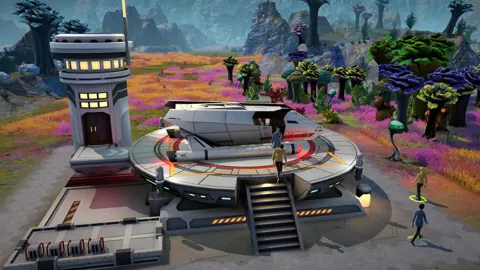
Quick access

Star Trek Outposts Unknown Release Date: Out Now on PC
Star Trek Outposts Unknown release date was October 20, 2026. Explore PC launch details, the $32.99 price, Mac plans, and tips for your first outpost.

Star Trek Outposts Unknown Demo Removed: What Happened?
Star Trek Outposts Unknown demo removed? Learn why the trial ended, what changed before launch, and how to play the full Steam release on Windows PC today.
Star Trek Outposts Unknown Building Tree Explained
Use the Star Trek Outposts Unknown building tree, plan resource chains, manage power and shielding, and prepare your outposts for life without the ship.

Star Trek: Outposts Unknown Food Guide: Feed Your Crew
Master Star Trek Outposts Unknown food with tips on food proteins, mess halls, cargo transfers, and organic supplies. Keep your crew fed on alien worlds.
Join the community
Official channels for news, updates and player help: